If your car overheats in traffic but cools down once you start moving, the radiator probably is not getting enough airflow at low speeds. When you are stopped, the electric cooling fan should move air through the radiator. If that fan is weak or not working, the engine temperature can climb.
Once the car picks up speed, outside air flows through the radiator and may bring the temperature back down. That temporary improvement does not mean the problem is fixed. A faulty fan, relay, fuse, wiring issue, low coolant, thermostat problem, restricted radiator, or weak coolant circulation could be responsible.
Why the Temperature Gauge Drops Once the Car Moves
Your engine produces heat, which the coolant carries to the radiator. Air flowing through the radiator removes some of that heat before the coolant returns to the engine.
At normal driving speeds, the car’s movement provides much of the needed airflow. At a stoplight or in slow traffic, the electric cooling fan has to take over.
A low-speed airflow problem often follows this pattern:
- The temperature stays normal at road speed.
- It starts climbing after several stoplights or a period of slow traffic.
- It drops again when traffic begins moving.
If this sounds familiar, the cooling fan is a good place to start. It may not be turning on, it may be running too slowly, or it may not be pulling enough air through the radiator.
Start With the Cooling Fan, Relay, and Electrical Controls
When an engine runs hot mainly while idling, a technician will usually check whether the electric cooling fan comes on when commanded.
The fan motor is only one possible source of the problem. Other causes include:
- A failed cooling-fan relay or blown fuse
- Loose, damaged, or corroded wiring
- A poor electrical connection
- Incorrect temperature-sensor input
- A fault in the circuit or module that controls the fan
Replacing the fan without testing the circuit can lead to an unnecessary repair. The motor may still work but may not be receiving power or the signal to turn on.
Electrical testing can show whether the fault is in the motor, relay, fuse, wiring, sensor input, or control circuit. George’s Wholesale Tire & Auto provides electrical services and engine diagnostics along with cooling-system service, so the fan can be checked as part of the complete system.
Other Problems That Can Cause Overheating in Traffic
The rise-at-idle and fall-while-moving pattern often suggests an airflow issue, but the rest of the cooling system still needs attention. The thermostat, water pump, radiator, hoses, coolant, and electric fan all play a part in controlling engine temperature.
Low Coolant or a Cooling-System Leak
Coolant carries heat away from the engine. If the level is low, the system may not transfer heat effectively. Extra airflow at road speed might help for a while, which can make the problem seem intermittent.
Check the coolant only when the engine is fully cool. A hot cooling system is under pressure, so do not open the radiator cap or coolant-reservoir cap while the engine is hot.
If the coolant keeps dropping, repeatedly topping it off is not a repair. The system should be checked for leaks, including cracks, corrosion, or damaged cooling-system components.
A Thermostat That Is Not Opening Properly
The thermostat controls coolant flow between the engine and radiator. If it sticks or does not open fully, coolant circulation may be restricted.
Thermostat problems do not produce the same symptoms in every vehicle. If the fan is working but the temperature continues to rise, the thermostat should be checked along with the coolant level, radiator flow, and water-pump operation.
A Restricted, Damaged, or Leaking Radiator
A radiator needs coolant flowing inside it and air moving across the outside. Several problems can reduce its ability to release heat:
- Internal restriction
- Debris or another external obstruction
- Corrosion
- Cracks or leaks
- Bent or damaged components
Road-speed airflow may help a struggling radiator cool the engine temporarily, but it will not correct the underlying problem. An inspection can determine whether the vehicle needs cooling-system service, a coolant exchange, or radiator repair in Port Richey.
Hose or Water-Pump Circulation Concerns
Cooling-system hoses move coolant between the engine, radiator, and related components. A damaged hose can leak, collapse, or interfere with proper circulation.
The water pump keeps coolant moving through the system. If it is not circulating enough coolant, the engine may continue to run hot even when the cooling fan works. Confirming that the fan spins is helpful, but it does not rule out other cooling-system problems.
What Should You Do When the Gauge Starts Climbing?
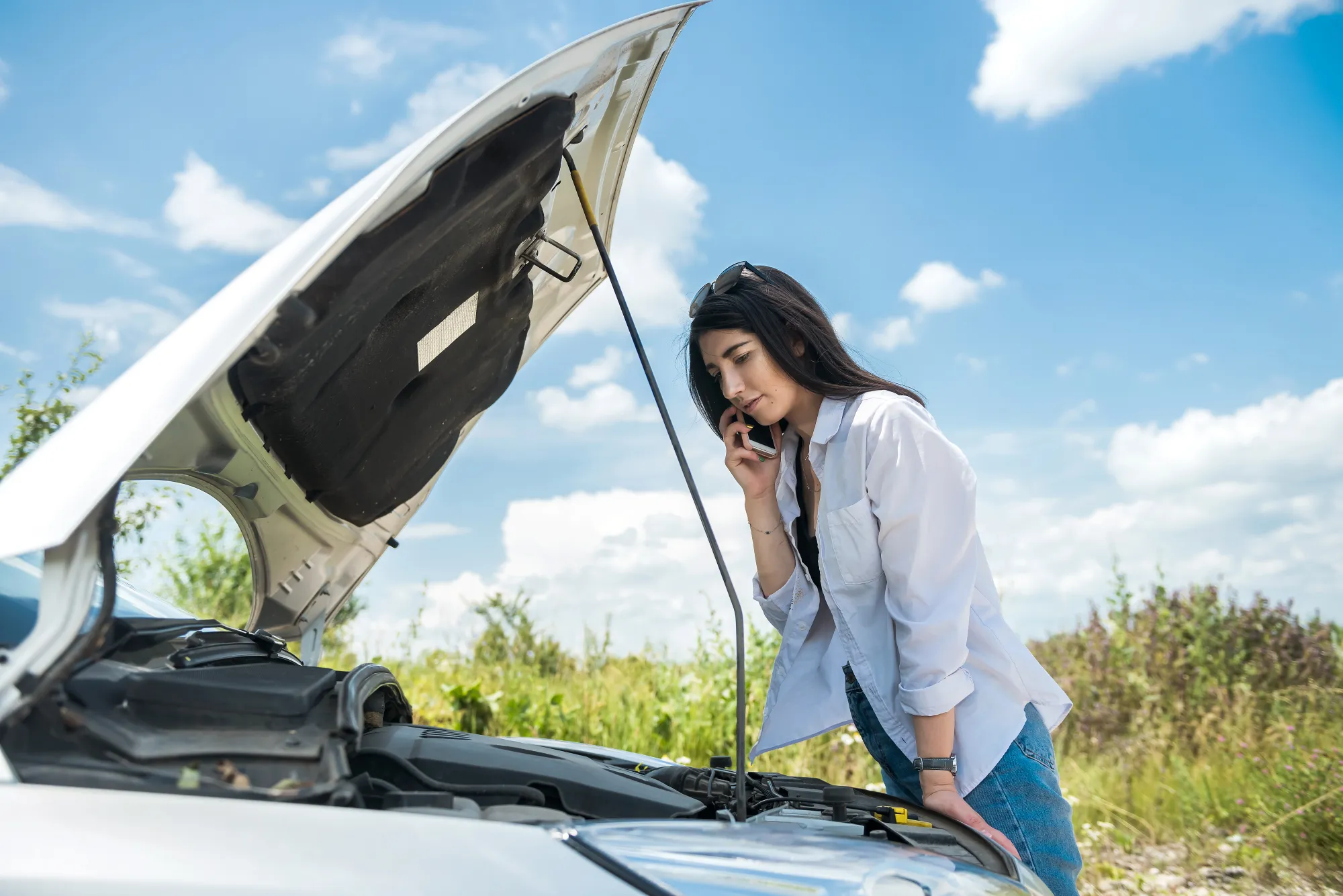
Keep an eye on the gauge instead of assuming it will fall when traffic clears. An overheating gauge is one of several warning signs that your car needs a mechanic, even if the reading improves once the car is moving.
If the temperature rises slightly and no other warnings appear, reduce the load on the engine and watch the gauge closely. If it keeps climbing, pull over somewhere safe.
Turn off the engine and arrange an inspection if:
- The gauge reaches the hot zone.
- A temperature warning light or message appears.
- You see steam or leaking coolant.
- The engine begins running poorly.
- The temperature continues to rise.
Do not keep driving just because the gauge dropped earlier at road speed. Moving air may be compensating for a fan or cooling-system problem, and the engine can start heating up again as soon as traffic slows.
After stopping, let the engine cool completely. Do not remove the radiator or coolant-reservoir cap while the system is hot. Pressurized coolant can escape when the cap is opened.
Cooling System Repair in Port Richey: What Should Be Checked?
Schedule an inspection if the temperature repeatedly rises at stoplights, in slow traffic, or while the car is idling. Service is also appropriate if the coolant keeps getting low, you spot a leak, or the electric fan does not come on as the engine warms up.
A cooling-system inspection may include:
- Checking whether the fan receives the command to turn on
- Testing the fan motor, relay, and fuse
- Inspecting wiring and electrical connections
- Checking the coolant level and condition after the engine cools
- Pressure-testing the system for leaks
- Evaluating thermostat operation
- Inspecting the radiator for restriction, corrosion, damage, or leaks
- Checking hoses and water-pump circulation
Several faults can produce similar symptoms, so the diagnosis should go beyond confirming that the fan spins. If the fan works and the engine still runs hot, the technician may need to check for coolant loss, restricted flow, thermostat trouble, radiator damage, or weak circulation.
George’s Wholesale Tire & Auto offers cooling-system service, radiator repair, coolant fluid exchange, electrical service, and engine diagnostics. If your car overheats in traffic around Port Richey or New Port Richey, let it cool and have the cause checked rather than relying on road-speed airflow to lower the gauge.