Most people only think about us when something is wrong with a tire. That makes sense. Our name says tire. But plenty of the cars that roll into our New Port Richey and Port Richey bays don’t have a tire problem at all. They have a brake problem, a cooling problem, a bad belt, or a sensor that’s been trying to get the driver’s attention for three weeks.
Here’s what makes it tricky: mechanical trouble and tire trouble can feel almost identical from the driver’s seat. A vibration at highway speed might be an out-of-balance wheel. It might also be a worn CV joint. A pull to the right might be alignment, or a brake caliper that isn’t releasing. Knowing the difference saves you money, and sometimes it keeps you off the shoulder of US 19 waiting for a tow.
Below are seven car warning signs that point to a mechanical issue rather than a tire issue, what each one usually means, and whether it’s safe to keep driving while you get it looked at.
1. Grinding, Squealing, or Clunking Noises
Your ears are the cheapest diagnostic tool you own. A new noise almost always means something has changed, and the kind of noise narrows it down fast.
- A high-pitched squeal when you brake is usually the wear indicator on your brake pads doing exactly what it was designed to do: make an annoying sound before metal touches metal.
- A grinding or growling sound while braking means you’re likely past the pad and into the rotor. That gets expensive quickly.
- A rhythmic clunk that speeds up as you accelerate often points to a CV joint, a U-joint, or a worn wheel bearing.
- A clunk or rattle over bumps usually means suspension: sway bar bushings, ball joints, or tired struts.
- A squeal that’s loudest at cold startup and then fades is often a serpentine belt or a failing idler pulley.
Can you keep driving? A brake squeal buys you a little time, usually a few hundred miles. Grinding doesn’t. Neither does a growl that changes pitch when you turn the wheel, because a failing wheel bearing can seize. Both belong in the shop this week, not next month.
2. Smells That Don’t Belong
Smells are the symptom we hear about least, usually because drivers assume it’s the car in front of them. Trust your nose.
- Sweet, syrupy smell means coolant, and coolant only smells like that when it’s leaking somewhere it shouldn’t be. In Pasco County heat, a slow coolant leak turns into an overheating engine faster than most people expect.
- Burning oil, or a hot acrid smell points to oil dripping onto the exhaust. Usually a valve cover gasket or an oil pan seal.
- Rotten eggs is typically the catalytic converter or a fuel mixture problem.
- A hot, sharp, chemical smell after heavy braking, say the slow crawl down US 19 in season traffic, can be overheated brakes or a dragging caliper.
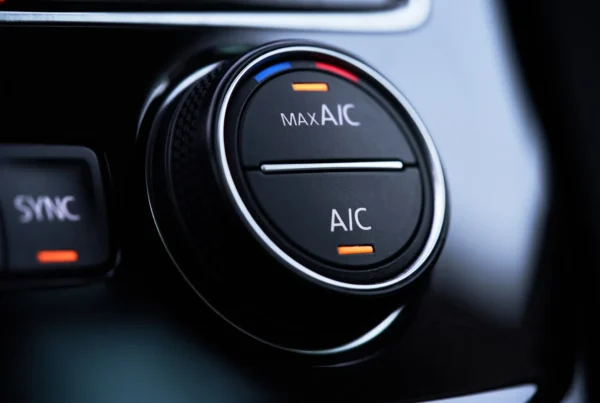
- Musty, mildew smell from the vents is moisture sitting in the A/C evaporator case. That’s close to universal on the Gulf Coast, and our post on why your car’s heat or A/C isn’t working walks through what to do about it.
Can you keep driving? Coolant and burning oil are both check-it-soon items. If you smell coolant and the temperature gauge is climbing, pull over and shut the engine off. An overheated engine can turn a two-hundred-dollar hose into a head gasket job, and a July afternoon in Florida is the worst possible time to learn that.
3. A Dashboard Light You’ve Learned to Ignore
Dash lights are color-coded for a reason. Yellow or amber means “get this checked.” Red means “stop safely and stop now.”
- Check engine light, steady: the engine or emissions system logged a fault. Could be a loose gas cap, could be a failing oxygen sensor, could be a misfire slowly cooking your catalytic converter.
- Check engine light, flashing: that’s an active misfire dumping raw fuel into the exhaust. Drive it gently, straight to a shop.
- Oil pressure light (red): shut the engine off. This is the one light where a few miles of driving can end an engine.
- Temperature warning (red): same answer. Pull over, let it cool, and don’t open a hot radiator cap.
- Battery or charging light: the alternator probably isn’t keeping up. You may have a short window before the car won’t restart, and our heat is hard on batteries year-round.
- ABS or traction control light: the brakes still work, but the anti-lock function may not. Get it diagnosed quickly, especially with our afternoon summer downpours.
Reading a code early is cheap. The consequences of not reading it aren’t. A scan takes minutes, and a replacement catalytic converter does not. A light that turns itself off is also not the same thing as a problem that fixed itself; the code is usually still stored, waiting to be read.
4. The Car Doesn’t Stop Like It Used To
Brakes give plenty of notice if you’re paying attention. A soft pedal that sinks toward the floor suggests air or moisture in the brake fluid, or a failing master cylinder. A pedal that pulses under your foot usually means a warped rotor. A car that pulls to one side while braking often means one caliper is doing more work than the other.
Stop-and-go driving on Little Road and US 19 is hard on brakes, so local cars often show these symptoms earlier than the mileage would suggest. Any of them are worth same-week attention, and a sinking pedal is worth same-day attention. Braking is the one system with no partial credit.
5. Vibrations That Don’t Follow the Rules
This is the symptom most often blamed on tires, and sometimes the tires really are the answer. Here’s how to tell them apart:
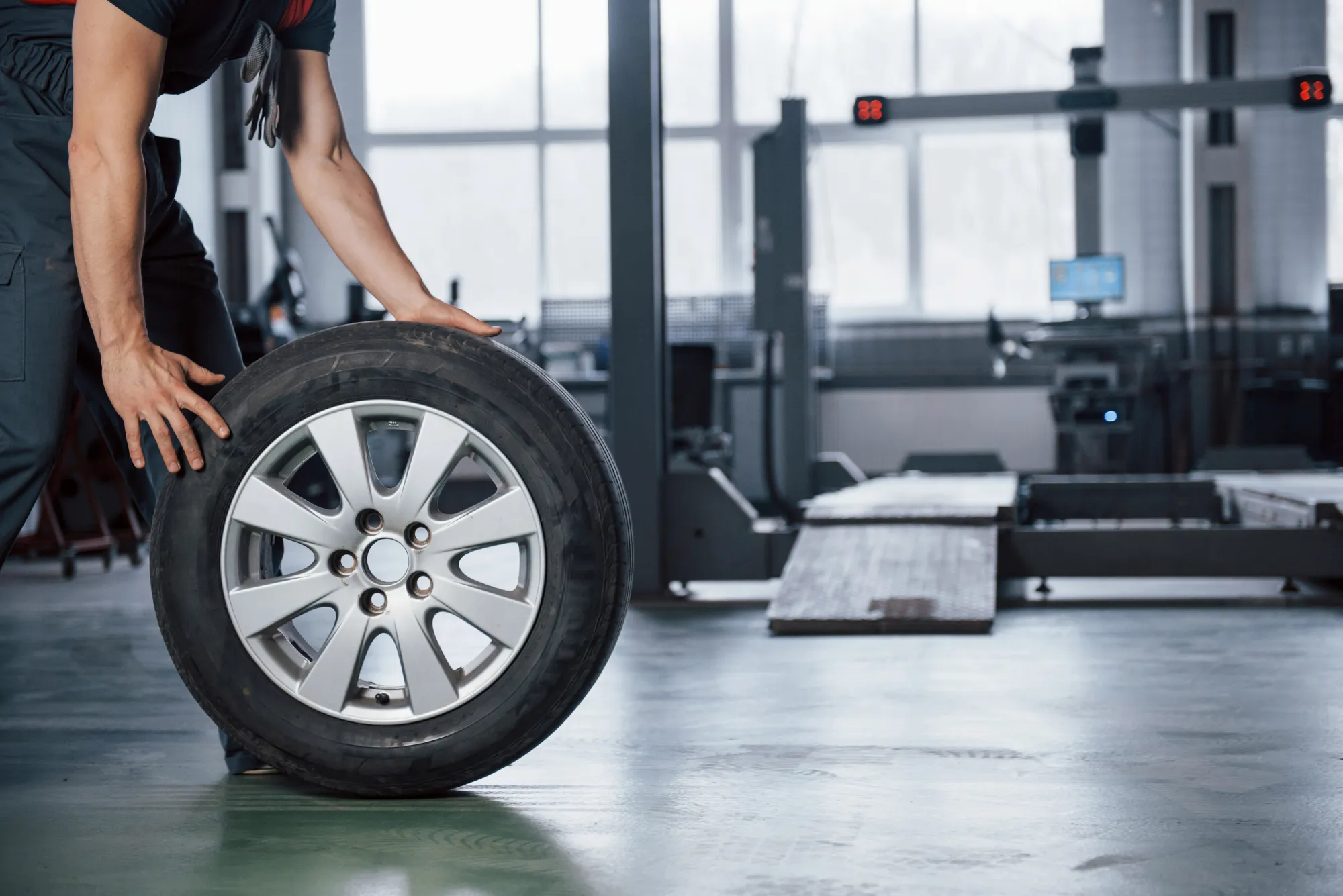
- A vibration that shows up around 55 to 65 mph and stays steady is usually wheel balance. That’s a tire shop fix, and it’s one of the things covered in our tire safety checklist.
- A vibration only when you brake is a brake rotor issue.
- A vibration that worsens as you accelerate, regardless of road speed, points to the driveline or an engine mount.
- Shaking at idle that smooths out once you’re moving is usually a misfire or a bad motor mount.
If your tires have already been balanced and the shake came back, the tires were never the cause. That’s a mechanical diagnosis, not a tire diagnosis. Our post on signs your vehicle needs a wheel alignment covers the steering side of this in more detail.
6. Rough Idle, Hesitation, or Worse Gas Mileage
These usually travel together, and they’re the classic signs your engine needs a tune-up rather than anything to do with your wheels.
- Rough or surging idle at a stoplight
- A stumble or flat spot when you press the accelerator
- Hard starting, especially first thing in the morning
- Fuel economy that quietly dropped a few miles per gallon
Common causes are spark plugs, ignition coils, a dirty mass airflow sensor, a clogged engine air filter, or a vacuum leak. None of these will strand you today, which is exactly why they get ignored for months. Meanwhile you’re paying for the problem every time you fill up, and a misfire left alone long enough can damage expensive parts downstream.
Can you keep driving? Yes, but book it. This is the least urgent item on the list and often the cheapest to fix.
7. Puddles, Drips, and Spots on the Driveway
If your parking spot has a stain that wasn’t there last year, your car is telling you something. Color helps identify it:
- Clear water under the passenger side on a hot day is A/C condensation. Completely normal in Florida, and honestly a sign the A/C is doing its job.
- Bright green, orange, or pink is coolant.
- Light brown to black and slick is engine oil.
- Reddish and slippery is transmission or power steering fluid.
- Clear to light brown and oily near a wheel could be brake fluid. That one is a stop-driving situation.
Small leaks are worth fixing while they’re still small. Every fluid in your car is there to lubricate, cool, or transfer force, and running low on any of them costs far more than the seal or hose that started it.
Quick Triage: Drive It, Book It, or Stop Now
If you remember only one part of this list, make it this one.
- Stop driving now: red oil pressure light, red temperature light, a brake pedal that sinks to the floor, or brake fluid pooling near a wheel.
- Get in this week: grinding brakes, a growl that changes when you steer, a flashing check engine light, a coolant or burning oil smell, a clunk over bumps.
- Book it when convenient: a steady check engine light, rough idle, hesitation, worse fuel economy, a brake squeal that just started, or a small drip you’re keeping an eye on.
When you can’t tell which bucket you’re in, treat it as the more urgent one. A short diagnostic visit costs a lot less than a tow off the Suncoast Parkway.
Why Trust a Tire Shop With Auto Repair in Port Richey?
Fair question. The honest answer is that the line between “tire shop” and “repair shop” stopped meaning much a long time ago. Tires, brakes, suspension, alignment, and steering are one connected system, and you can’t properly diagnose one without understanding the others. That’s why we handle full auto repair in Port Richey and New Port Richey instead of only selling rubber.
In practice, that means:
- One shop that already knows your vehicle and its history
- A straight answer on whether your vibration is a tire problem or a mechanical one, instead of a guess
- Everything from an oil change to brake service to a full tune-up and repair under one roof
- No getting bounced between a tire store and a mechanic while each one blames the other
So if you’ve typed “mechanic near me” into your phone from a parking lot in New Port Richey and figured the tire place couldn’t help, we’d like to change your mind. Same shop, same people, two Pasco County locations, and the same straight answers our tire customers have gotten for years.
What to Tell Us When You Call
You’ll get a faster, cheaper diagnosis if you can answer a few questions. Before you come in, pay attention to:
- When it happens: cold start, highway speed, braking, turning, idling.
- Whether it changes with road speed, with engine RPM, or with steering input.
- How long it’s been happening, and whether it’s getting worse.
- Any lights on the dash, and whether they’re steady or flashing.
Two minutes of that detail can save an hour of diagnostic time, and we’d rather spend that hour fixing the car. If the noise only shows up while driving, offer to ride along. Hearing it ourselves beats any description.
Several of these show up far less often on a car serviced on schedule. Here is how often to change your oil in our stop-and-go heat.
Schedule Auto Repair in New Port Richey or Port Richey
You know your vehicle better than anyone. If something feels off, it usually is, and small problems are always cheaper than the breakdown they turn into. A noise you can’t place, a light that won’t go off, a vibration that came back after a balance: our team at both our New Port Richey and Port Richey locations can find the cause and give you a straight answer.
Schedule an appointment and let’s take a look before it becomes a bigger repair.